Full Biography
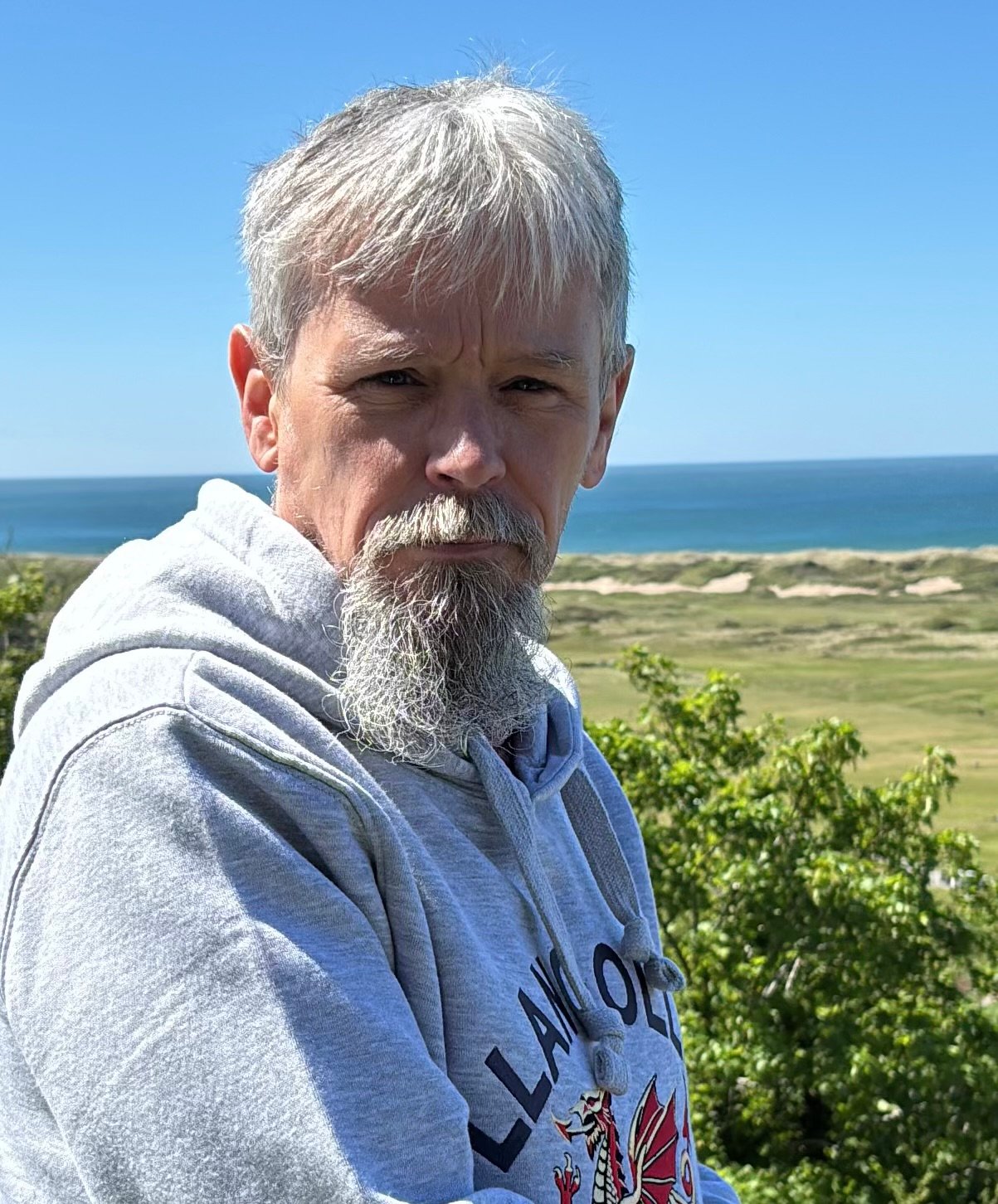
A Mind Built for Darkness
Colin Reardon grew up in a house where all the clocks had stopped. That's not a metaphor. The estate on the edge of the Somerset moors had no working timepieces, and as a child, he learned to measure the hours by the quality of light seeping beneath the cellar door. His father was an architect who believed that empty rooms had opinions. His mother read folklore with the same devotion other parents reserved for scripture.
That childhood — eerie, isolated, and saturated with the kind of quiet that makes you listen for things — forged a writer obsessed with the margins of human experience: the moment before terror fully arrives, the space between sleep and waking, the texture of a fear you cannot name.
He did not have many friends. He had books. He had the moors. He had the particular silence of a house that had decided to stop counting time.
The Education
At eighteen, Reardon left Somerset for Edinburgh, where he studied English Literature with a focus on the Gothic tradition. His tutors remember him as a brilliant and troubling student — one who turned in a dissertation comparing the supernatural machinery of Sheridan Le Fanu to the mechanisms of modern psychiatric diagnosis. It earned a distinction. It also made his supervisor lose sleep.
It was in Edinburgh that he encountered the writers who would shape him: Shirley Jackson's precision, Arthur Machen's deep-country dread, and the strange, airless terror of Thomas Ligotti, who convinced Reardon that horror was philosophy with sharper teeth.
"Reardon is the heir to the throne of dread — a writer who makes darkness feel like home."
— The New York Times Book ReviewThe First Words in Print
His first published story, The Sound Beneath the Floor, appeared in Black Static in 2003. It is a short, quiet story about a woman who begins to hear breathing through the heating vents of her flat. It is, to this day, one of the most shared stories in the magazine's history. Several readers wrote to say they had their own vents checked.
That story established what would become the Reardon signature: dread rooted not in the extraordinary but in the ordinary made wrong. A floor. A sound. A certainty that something is listening.
The Novel Career
His debut, The Cold House (2009), arrived without a vast publicity apparatus but with a momentum that felt almost supernaturally inevitable. Word spread through the horror community the way rumours spread through old houses — quietly, in the walls, until suddenly everyone knew. By the end of its first year, it had sold 80,000 copies and been translated into nine languages.
He has since published thirteen more novels. What the Water Keeps (2013) won the Bram Stoker Award and permanently altered how critics discussed coastal horror. The Hollow Season (2017) was his first New York Times bestseller. The Cartography of Screaming (2020) was described by a colleague as "the book that will follow you home." His latest, Where Shadows Learn Your Name (2025), is already being called his masterpiece.
What He Believes About Horror
In a 2022 lecture at the Hay Festival, Reardon argued that horror is the only genre honest enough to acknowledge that existence is frightening — that the body fails, that consciousness is fragile, that other minds are opaque, and that the universe operates without regard for our comfort. Other genres offer the reader a way through. Horror offers the reader the truth.
He was met with a standing ovation and one walkout. He considers this the correct ratio.
← Return to Home